Story Prism is best understood as a creative second brain for writers, not as a full AI film production suite. It is built around organizing story knowledge, connecting notes, and helping AI understand a project's internal logic before generating text.
For filmmakers, Story Prism is most relevant at the writing, worldbuilding, research, and structure stage. It is less useful once you need characters, shot plans, storyboards, generated video, voice, music, sound, or production packaging.
Story Prism Review: Project Knowledge Base for Writers
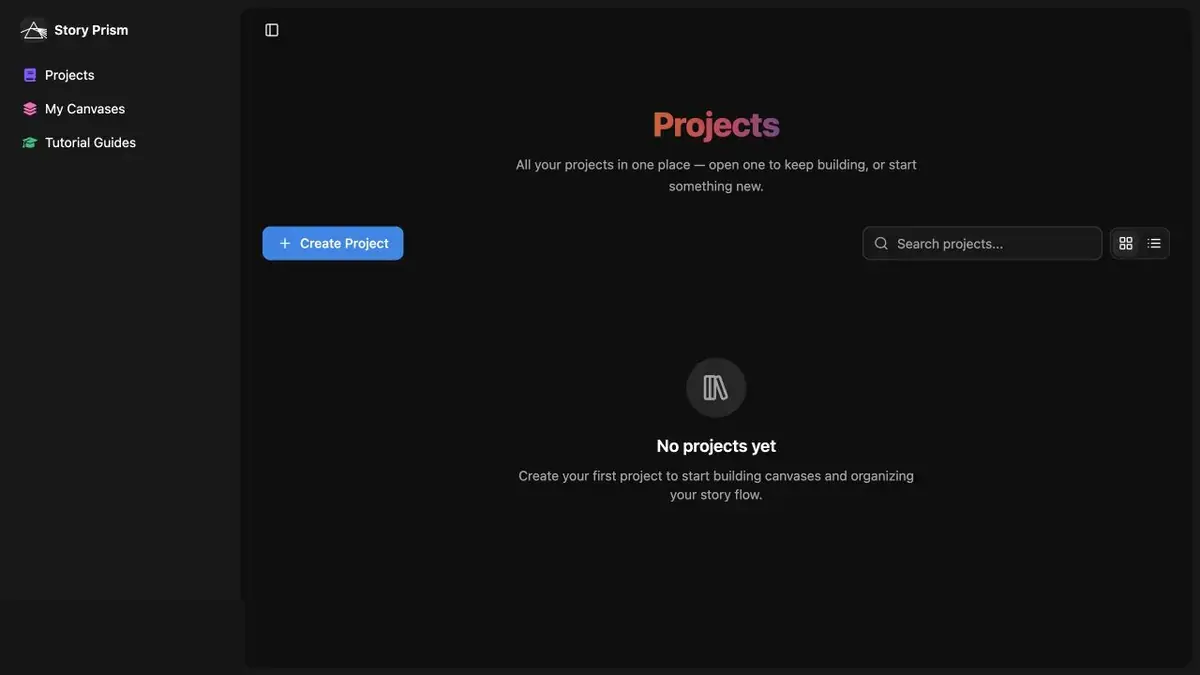
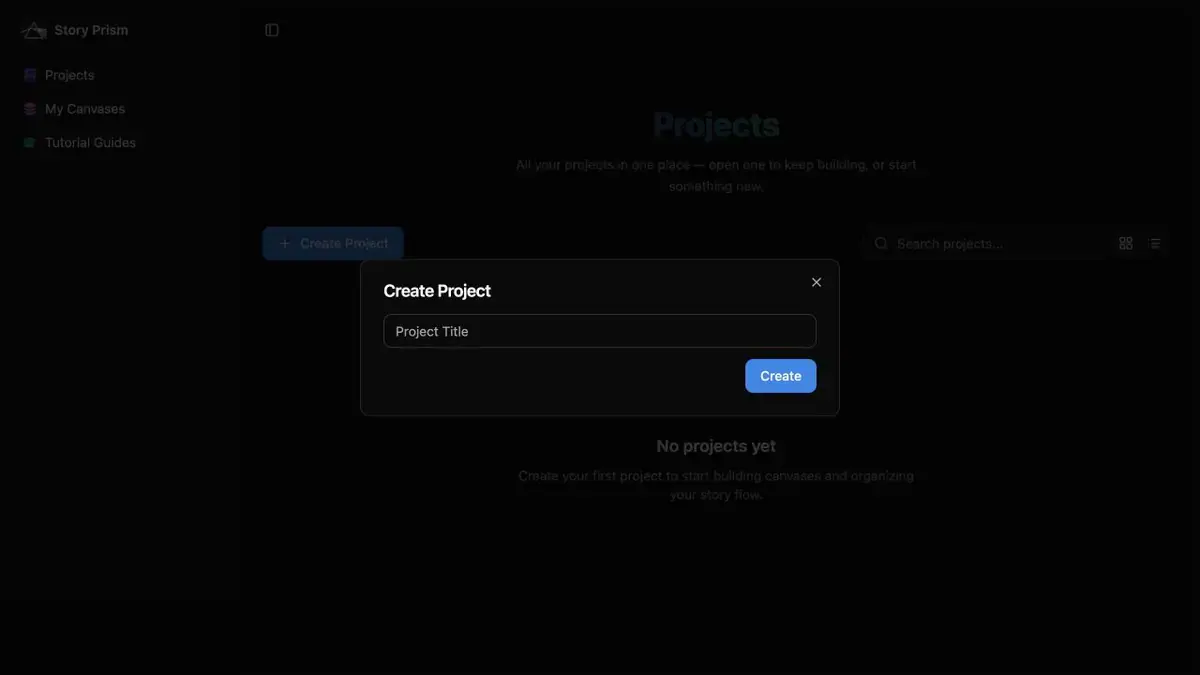
The signed-in workspace is organized around projects, which fits the product's "AI brain" promise well: each story can become its own knowledge base instead of another loose chat thread.
Story Prism Features: Knowledge Graphs, Canvas, and Story Context
Project Knowledge Graph
Story Prism's strongest idea is context. It positions itself as a way to build a project-specific AI brain from notes, characters, plot points, research, and relationships.
AI Generation Grounded in Notes
Story Prism separates lighter generations from deeper reasoning generations. That makes sense for a writing tool because not every task needs the same amount of AI power: expanding a note, reasoning through lore, and shaping a larger story bible are different jobs.
Templates and Manual Workspace
The free tier says users keep full editor access, unlimited canvas, and template library access even after the trial allocation ends. That makes Story Prism useful as a manual organization tool even before paying.
Story Prism Pricing: Free Trial Credits and Writer-Focused Plans
Story Prism has a free plan and three paid tiers.
- Free: $0/month, no credit card required, includes a 7-day trial allocation with 1,000 base generations, 50 core generations, 10 advanced reasoning generations, document upload, and auto-tagging; always-free access includes full editor, unlimited canvas, and template library.
- Basic: $10/month, 1,000 base generations/month, 50 core generations/month, templates, document upload, and auto-tagging.
- Standard: $20/month, 1,000 base generations/month, 300 core generations, 8 advanced reasoning messages per 3-hour window, templates, document upload, and auto-tagging.
- Premium: $40/month, 1,000 base generations/month, 750 core generations, 15 advanced reasoning messages per 3-hour window, templates, document upload, and auto-tagging.
Annual billing is positioned as the better-value option, with 20% savings.
Story Prism Alternative: Why Melies Can Be a Better Fit
Story Prism is stronger when the task is organizing a story universe, building a knowledge graph, and letting AI reason from notes.
is stronger when the task is making an AI film. Melies connects the writing layer to scenes, AI actors, storyboards, prompts, voices, music, sound effects, posters, and video generation. For someone searching for a Story Prism alternative, the key question is whether they need a writer's second brain or an AI filmmaking workspace.Story Prism FAQ: Pricing, Features, and Alternatives
Is Story Prism free?
Yes. Story Prism has a Free plan with a trial allocation for generations and always-free manual access to the editor, canvas, and templates.
Does Story Prism own generated writing?
Users retain ownership of their original content and project files, and Story Prism does not use user content to train its own internal AI models.
Is Story Prism for screenwriters?
It can be useful for screenwriters at the research, worldbuilding, character, plot, and structure stage. It is not a complete screen-to-video production pipeline by itself.