Magic Hour is an AI creation suite for video, image, and audio work. It is not trying to be one perfect filmmaking app; it is trying to give creators a big toolbox in one browser workspace, with Image-to-Video, Text-to-Video, Face Swap Video, Lip Sync, Video-to-Video, AI Image Editor, voice, music, templates, API access, and a large model catalog.
My short take: Magic Hour is strong when you already know the asset you want to create. It is fast to reach the right tool, and the app makes model choice feel approachable. Melies is the better Magic Hour alternative when the job is not only to generate clips, but to build a film project with story structure, scenes, characters, storyboards, prompts, voices, music, sound effects, and production assets that stay connected.
Magic Hour Review: Best for Fast AI Media Tasks
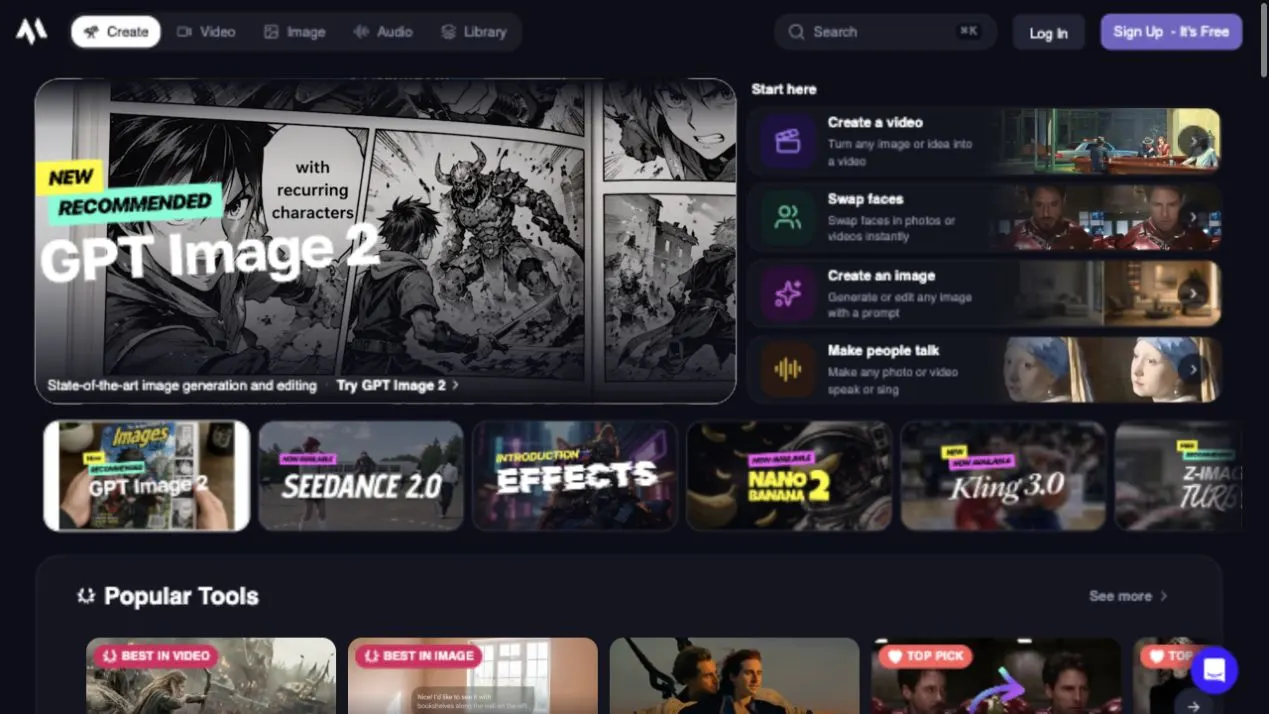
Magic Hour's best quality is speed. The create hub immediately points you toward common jobs: create a video, swap faces, create an image, or make a person talk. That sounds simple, but it matters because many AI video tools bury their best features behind model names and confusing generation settings.
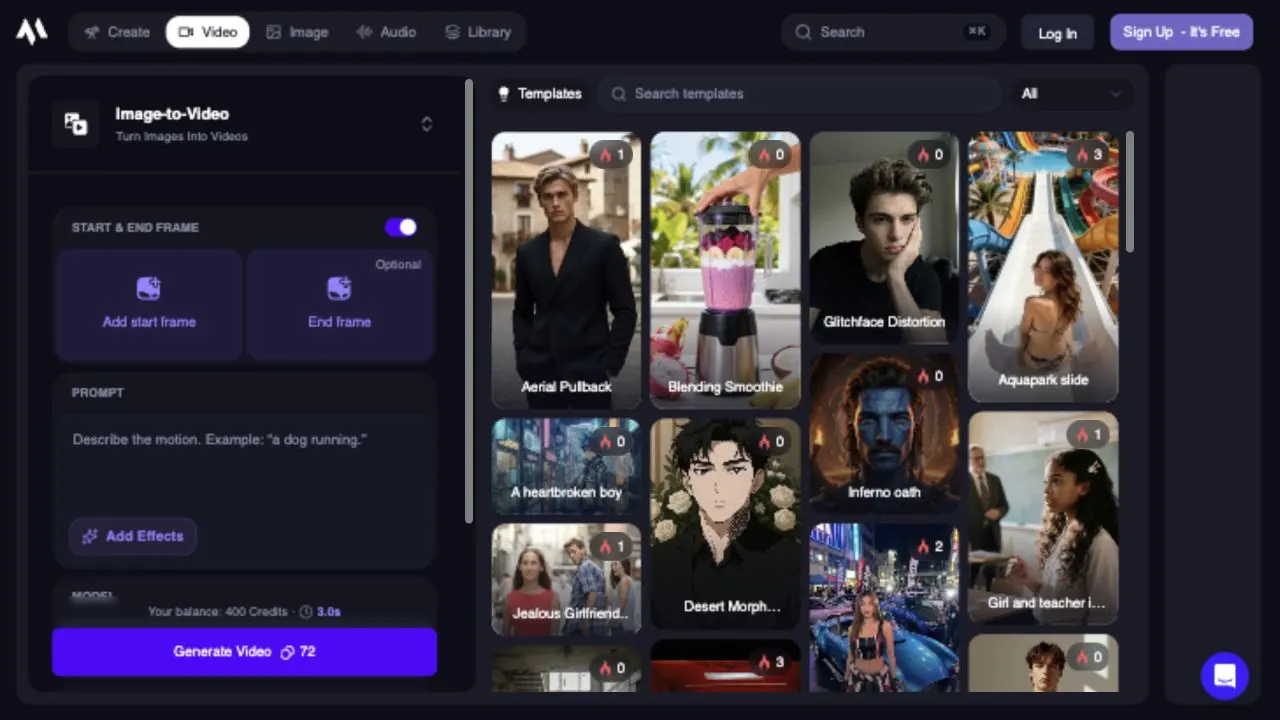
I could inspect the real create hub and open the Image-to-Video workspace before signing up. The screen exposed start and end frames, the prompt, model settings, duration, resolution, audio, templates, the credit balance, and the cost of the generation. That is enough to judge how the tool is organized, but not to claim that I completed or quality-checked a generated video.
The tool list is also genuinely broad. Magic Hour covers Image-to-Video, Text-to-Video, Face Swap Video, Lip Sync, Talking Photo, AI Image Editor, Video-to-Video, Subtitle Generator, AI Video Extender, AI Video Expander, AI Music Generator, Voice Generator, Voice Cloner, and API access.
This is a good product for creators who need many small AI media jobs from one place. For filmmakers, the weakness is structure: Magic Hour gives you tools and templates, but it does not naturally organize a story, scene list, cast, shot plan, style bible, voices, music, and final assets as one film project.
What I Like About Magic Hour
I like that Magic Hour makes the main workflows visible quickly. The Image-to-Video screen shows the start frame, optional end frame, prompt box, model area, credit cost, and templates in one place. That makes the product easier to understand than tools where you have to guess what a generation will cost.
The create hub is also useful. Seeing video, image, audio, library, popular tools, and model cards together helps if you switch between quick social clips, face swaps, lip sync experiments, AI image edits, and short video variants.
Magic Hour also has a practical model lineup for video creators. For users who mainly want fast access to several current models, this breadth is the reason to try it. The catalog changes quickly, so I would verify the model required for a project inside the app rather than relying on an older list.
What Could Be Better
Magic Hour feels more like a media utility hub than a filmmaking system. It is good when you need a specific output, but it does not guide you through the bigger creative arc of building a film: script, scenes, recurring characters, shot continuity, voice, sound, music, posters, and project-level organization.
The credit system is clear enough at the plan level, but real usage can still be hard to estimate before a larger project. Different models, resolutions, durations, audio options, and API workflows consume credits differently, so production volume takes planning.
Some parts of the product also feel optimized for creator, social, and marketing workflows rather than narrative filmmaking. That is not a flaw if you need quick assets, but it matters if you are comparing Magic Hour with a story-first tool like Melies.
Magic Hour Pricing: Good Entry Price, Watch Usage
The current
is structured like this:- Free access: starter or daily credits can vary by account; free video and audio output may include a watermark and is limited to personal, non-commercial use.
- Creator: €10.75/month billed annually, 144,000 credits/year, higher-resolution output, commercial use, and three concurrent generations.
- Pro: €23/month billed annually, 300,000 credits/year, about 3.5 hours of video, 60,000 images, full API access, 1472px high resolution, 5GB uploads, five concurrent generations, priority queue, and priority support.
- Business: €56/month billed annually, 840,000 credits/year, about 9.7 hours of video, 168,000 images, full API access, 4K high resolution, 10GB uploads, unlimited concurrent generations, priority queue, and priority support.
Magic Hour also sells credit packs, which can be useful if a project needs extra generations without changing subscription tier.
Magic Hour Alternative: Why Melies Can Be a Better Fit
Magic Hour is a good choice when you want a broad AI media toolkit: face swap, lip sync, image-to-video, text-to-video, AI image editing, voice, music, templates, and API access. It is especially useful for creators and teams that want many self-contained tools in one product.
Melies is stronger when the project is a film rather than a collection of isolated media tasks. Melies is designed around story, scenes, AI actors, storyboards, image prompts, video prompts, voices, music, sound effects, posters, and production assets.
For people searching for a Magic Hour alternative, the key difference is workflow. Magic Hour gives you a large creation toolbox.
gives filmmakers a project-centered workspace for developing and producing an AI film.Magic Hour FAQ: Pricing, Features, and Alternatives
What is Magic Hour?
Magic Hour is an AI video, image, and audio creation suite. It includes tools such as image-to-video, text-to-video, face swap, lip sync, AI image editor, AI storyboard generator, voice generation, music generation, templates, and API access.
Is Magic Hour free?
Yes. Magic Hour offers free access without a card. Starter credits and account rewards can vary, and free video or audio output may include a watermark and is limited to personal use.
How much does Magic Hour cost?
Creator starts at €10.75/month billed annually, Pro at €23/month, and Business at €56/month. Credit packs are also available.
What is the best Magic Hour alternative?
Melies is a strong Magic Hour alternative for filmmakers who want story, scenes, AI actors, storyboards, prompts, voices, music, sound effects, posters, and production assets in one project workspace. Magic Hour is stronger as a broad AI media tool hub.